Not every crack in a porcelain worktop is caused by impact or accident. In many cases, the real problem begins long before the damage becomes visible — during the installation itself.
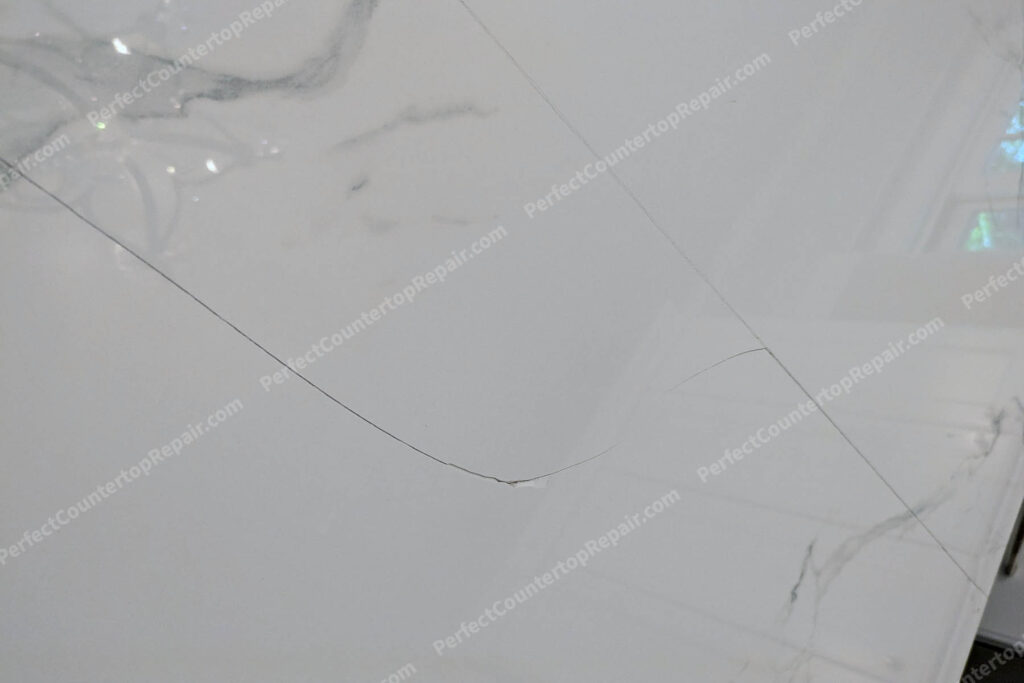
In this video, we’re looking at a porcelain island worktop that developed a significant crack. At first glance, it may seem like the result of everyday use. But when we take a closer look underneath the surface, the true cause becomes clear.
As you can see, there is a large unsupported groove beneath the worktop. This gap should never exist in a properly installed surface. Porcelain, while extremely durable and resistant to heat and scratches, requires precise and correct support across its entire structure. Without that support, even a strong material becomes vulnerable.
In this case, the improper assembly left a weak point directly at the corner of the island. When someone naturally leaned against the edge — something that happens in every kitchen — the pressure was concentrated on that unsupported area. With no reinforcement beneath it, the stress had nowhere to disperse.
As a result, the porcelain cracked.
This type of damage is not just a surface issue. It reflects a deeper structural failure caused by poor installation practices. A properly installed worktop is designed to distribute weight evenly, preventing exactly this kind of problem.
Situations like this highlight the importance of experience, precision, and understanding of the material. Porcelain is not forgiving when it comes to mistakes beneath the surface. What may look fine from above can hide critical flaws below.
That’s why every repair begins with identifying the root cause — not just fixing what’s visible, but addressing why it happened in the first place.
Because in the world of stone and porcelain surfaces, true quality isn’t only about how it looks… it’s about how it’s built.