Granite Countertops Crack Repair
For decades, granite has been regarded as the king of natural stone countertops. It has earned that reputation for good reason. Granite is one of the strongest, most durable, and most reliable countertop materials available. It resists scratches, handles daily wear exceptionally well, and, when properly sealed, is highly resistant to stains and moisture. Homeowners have trusted granite for generations because of its beauty, longevity, and outstanding performance.
Although quartz has become increasingly popular in recent years, granite still offers advantages that many engineered surfaces cannot match. One of its greatest strengths is its exceptional heat resistance. You can place hot pots and pans on a granite countertop with far less concern than you would have with many other countertop materials.
However, despite granite’s incredible durability, there is one hidden issue that has nothing to do with the stone itself.
The problem lies in the way some countertops are manufactured.
To reinforce the narrow sections of granite around the sink cutout, some fabricators embed steel reinforcement bars into the underside of the countertop. While this method is intended to strengthen the stone during transportation and installation, it can create a serious long-term problem if the steel is not properly protected.
Over time, water can seep through small openings around the sink or faucet and reach the embedded steel. As the steel begins to rust, it expands. This expansion creates tremendous pressure from inside the granite, eventually causing the countertop to crack—often suddenly and dramatically. In many cases, homeowners believe the granite has failed when, in reality, the hidden steel reinforcement is the true cause of the damage.
In this article, we’ll explain why this happens, how to recognize the warning signs, what repair options are available, and how to prevent the problem from getting worse.
Table of Contents
- Why Granite Countertops Crack and Separate Around the Sink: The Hidden Problem Many Homeowners Don’t Know About
- Why Were Steel Reinforcement Rods Installed in Granite Countertops?
- What Causes Granite Countertops to Crack Around the Sink?
- How to Tell If Your Granite Countertop Has Rusted Steel Reinforcement
- Why Granite Countertops Crack Around the Sink
- Why Granite Countertop Cracks May Be Worse Than They Appear
- Granite Countertop Crack Repair Options
- How to Achieve Permanent Granite Countertop Crack Repair
- Why Experience Matters in Granite Countertop Crack Repair
- How Modern Granite Countertop Reinforcement Methods Prevent Cracks
- How to Know Your Granite Crack Repair Will Last
- How Much Does Granite Countertop Crack Repair Cost?
1. Why Granite Countertops Crack and Separate Around the Sink: The Hidden Problem Many Homeowners Don’t Know About

Granite countertops are known for their beauty, durability, and long lifespan. However, one of the most serious and misunderstood problems in granite countertops is cracking, separation, lifting, or deterioration around the sink area.
Many homeowners assume that these cracks are simply caused by age, impact damage, or normal wear and tear. In reality, the underlying cause is often hidden deep inside the countertop itself.
One of the most common causes of this type of failure is the corrosion of steel reinforcement rods embedded within the granite during fabrication.
2. Why Were Steel Reinforcement Rods Installed in Granite Countertops?

Although granite is an extremely strong natural stone, certain areas of a countertop are naturally more vulnerable than others. The area surrounding the sink cutout is one of the weakest sections because a large portion of the stone has been removed.
For many years, fabricators commonly installed steel reinforcement rods beneath the sink area to strengthen the stone and reduce the risk of breakage during transportation and installation.
At the time, this was considered a standard and effective reinforcement method. Unfortunately, as these countertops aged, an unexpected problem began to emerge.
3. What Causes Granite Countertops to Crack Around the Sink?

Over time, water and moisture can penetrate the countertop through tiny cracks, worn sealant, openings around the sink or faucet, or other poorly sealed joints.
Once moisture reaches the embedded steel reinforcement, the metal begins to corrode and rust.
As steel rusts, it expands significantly—occupying much more volume than the original metal. This expansion creates tremendous pressure from within the granite slab.
Because granite is an extremely strong but rigid material with very little flexibility, it cannot absorb this internal pressure. As a result, the stress builds over time until the stone eventually cracks, separates, or, in severe cases, breaks apart.
4. How to Tell If Your Granite Countertop Has Rusted Steel Reinforcement

If steel reinforcement inside a granite countertop begins to rust, homeowners may notice one or more of the following warning signs:
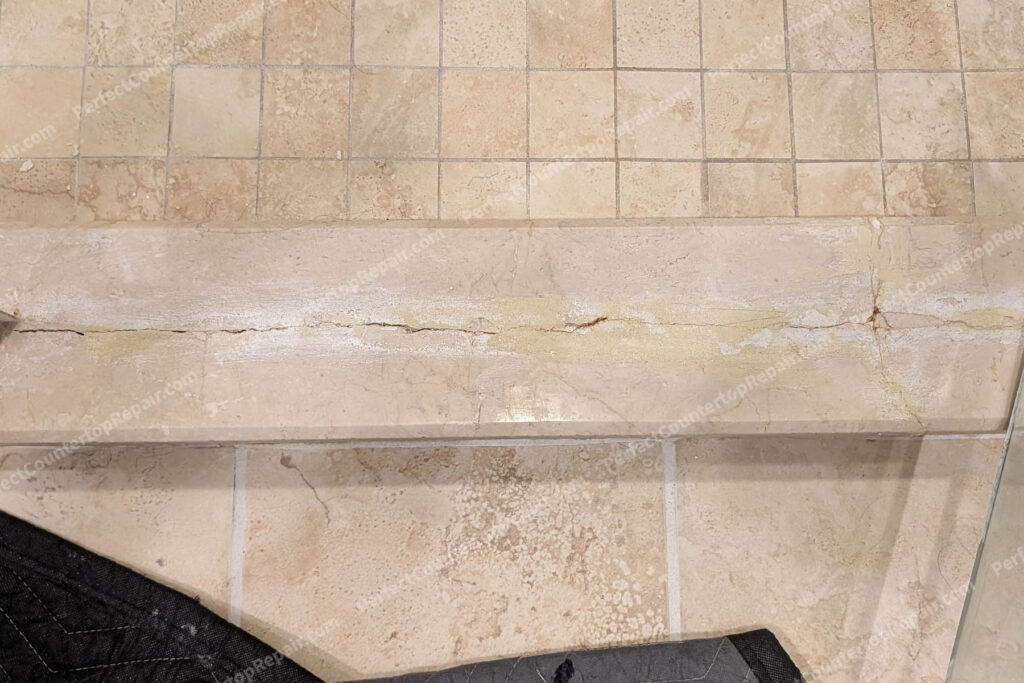
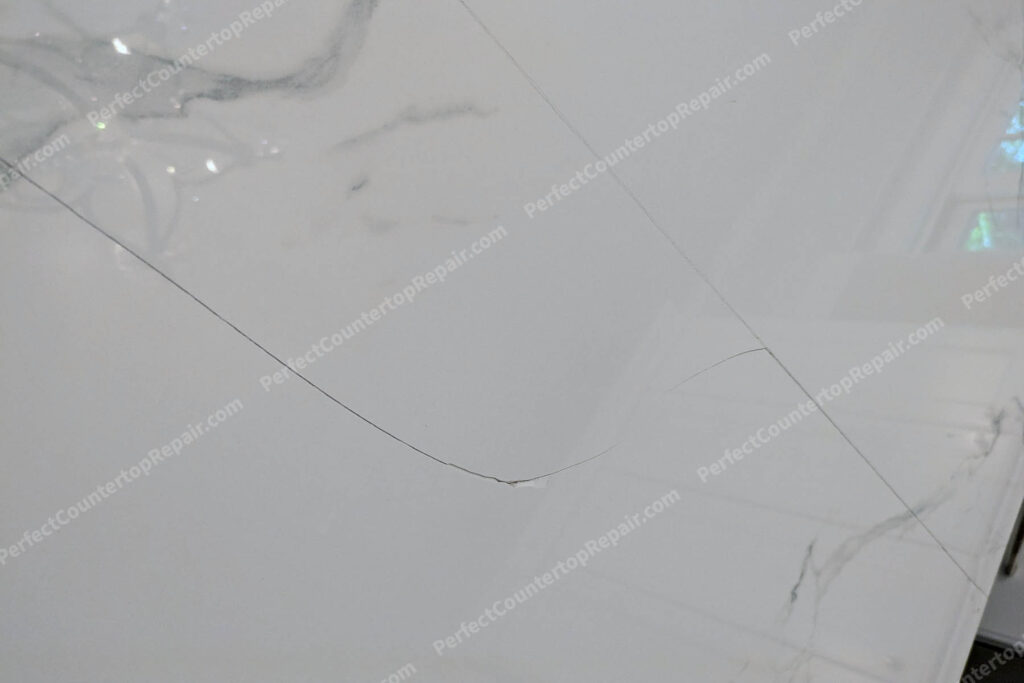
Cracks developing around the sink or faucet
Sections of granite beginning to lift or separate
Brown or orange rust stains appearing near cracks
Small gaps opening between stone sections
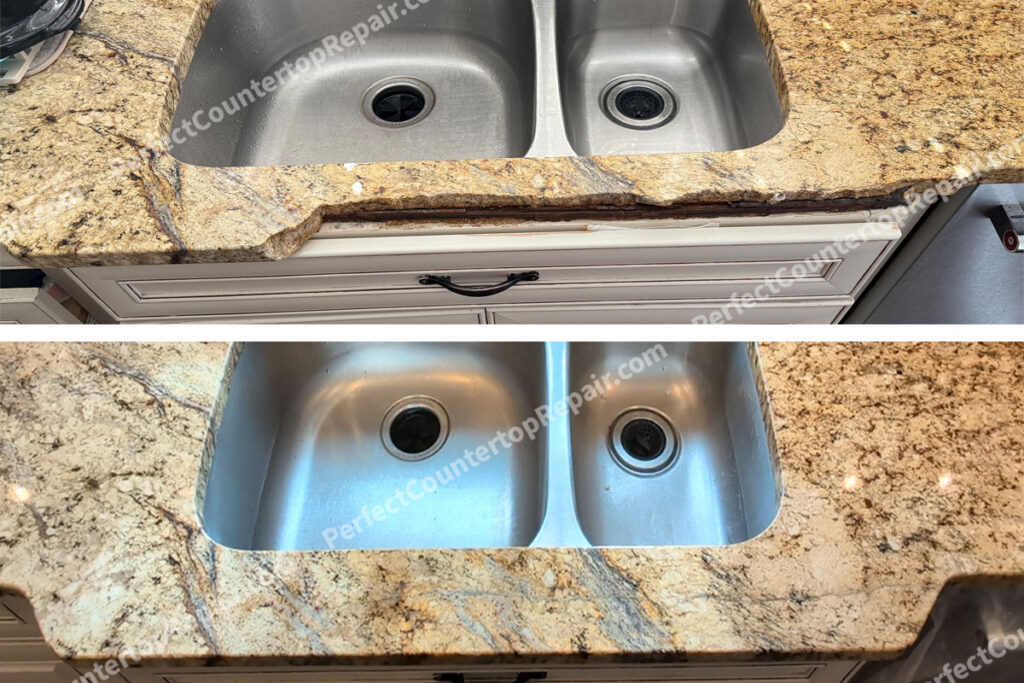
Chipped or crumbling edges around the sink
Uneven or raised areas near the sink cutout
Cracks that continue to grow over time
Loose pieces of stone that begin to move
In more advanced cases, the expanding rust can generate enough internal pressure to cause large sections of the countertop to separate or break away.
5. Why Granite Countertops Crack Around the Sink

The sink area is one of the most vulnerable parts of a granite countertop because it is constantly exposed to water, humidity, cleaning products, and daily use.
Even when there is no visible leak, moisture can slowly penetrate through:
Sink seams
Faucet openings
Silicone joints
Undermount sink attachments
Plumbing connections
Previous repairs or existing cracks
Over many years, repeated exposure to moisture can accelerate corrosion of the steel reinforcement beneath the granite.
Because reinforcement rods are commonly installed directly below the sink opening to strengthen the stone, this area is especially susceptible to rust expansion and cracking. As the steel corrodes and expands, it can create internal pressure that eventually causes cracks, separation, or structural damage to the granite.
6. Why Granite Countertop Cracks May Be Worse Than They Appear

One of the biggest challenges with this type of granite repair is that the visible crack often represents only a small part of the actual damage happening beneath the surface.
A homeowner may see a crack that appears to be only a few inches long, while the rusted steel reinforcement causing the problem may extend much farther underneath the countertop.
During the repair process, once the damaged area is carefully opened, additional hidden issues may be discovered, including:
- Extensive steel corrosion
- Internal cracks within the granite
- Weakened stone sections
- Hidden separation between stone pieces
- Additional deterioration along the reinforcement channel
For this reason, it is often impossible to determine the full extent of the damage until the affected area has been properly exposed and inspected by an experienced stone repair specialist.
7. Granite Countertop Crack Repair Options

A cosmetic repair typically includes:
Filling cracks and gaps with professional stone epoxy
Rebonding separated sections
Color matching to blend the repair
Surface refinishing and polishing
This type of repair can significantly improve the appearance of the countertop, strengthen the damaged area, and in some cases help prevent the crack from spreading.
However, every situation is different, and the best repair method depends on the countertop’s condition. An experienced stone repair technician should carefully inspect the damage before recommending the proper solution.
In many cases, if the crack is relatively small and stable, the technician may recommend performing a cosmetic repair first and monitoring the countertop over time. If the crack remains unchanged, no further work may be necessary.
On the other hand, if the crack continues to widen, if the stone begins to separate, or if the technician determines that the expanding steel reinforcement is causing significant internal pressure, a cosmetic repair alone may only be a temporary solution.
In those situations, the only permanent repair may be to carefully open the affected area, remove the rusted steel reinforcement completely, thoroughly clean the cavity, repair the damaged stone, and restore the countertop to its original appearance. This is a much more complex and costly procedure, but in severe cases it may be the only way to eliminate the source of the problem.
Because there is no one-size-fits-all solution, it is essential to hire a technician who specializes in natural stone repair, not simply someone who has experience fabricating or installing countertops. Ask to see examples of previous repairs, especially repairs involving cracked granite around sinks. A skilled repair specialist will evaluate the condition of the stone and recommend the most appropriate solution rather than automatically choosing the most extensive repair.
8. How to Achieve Permanent Granite Countertop Crack Repair

A more permanent solution involves addressing the root cause of the problem.
This process may include:
- Carefully opening the damaged section
- Exposing the steel reinforcement rod
- Removing corroded metal
- Cleaning and stabilizing the area
- Reconstructing the damaged stone
- Rebonding separated sections
- Grinding and polishing the repaired surface
Although more complex, this approach offers the best opportunity for a long-term repair.
9. Why Experience Matters in Granite Countertop Crack Repair


Repairs involving rusted steel reinforcement beneath granite countertops are among the most challenging procedures in the natural stone repair industry.
Successfully restoring a damaged countertop requires much more than simply filling a visible crack. A skilled technician must understand how stone behaves under stress and how to properly address both visible damage and underlying causes.
A qualified stone repair specialist should have experience with:
Granite structure and natural stress points
Damage caused by expanding rusted steel reinforcement
Safe opening and disassembly techniques
Structural stone restoration
Advanced color matching and blending
Precision grinding and polishing
Countertop reinforcement methods
An inexperienced repair attempt can make the problem worse, leading to additional cracking, larger areas of damage, permanent cosmetic imperfections, or even complete countertop replacement.
Because every granite countertop and every crack situation is different, these repairs require careful evaluation, technical knowledge, and hands-on experience to determine the correct repair method.
10. How Modern Granite Countertop Reinforcement Methods Prevent Cracks

Today, many stone fabricators use modern reinforcement methods, including fiberglass rods, carbon fiber systems, composite materials, and other corrosion-resistant supports.
These newer materials provide strength while greatly reducing the risk of rust-related expansion damage inside the stone.
Because of improvements in fabrication techniques, cracks caused by rusted steel reinforcement are more common in older granite countertops manufactured with traditional steel rods.
11. How to Know Your Granite Crack Repair Will Last

Cracks, separation, and deterioration around a sink are often signs of a much deeper problem hidden beneath the granite’s surface.
In many older granite countertops, embedded steel reinforcement rods can rust after years of exposure to moisture. As the steel corrodes, it expands, creating tremendous internal pressure that eventually causes the granite to crack, separate, and weaken.
For this reason, proper diagnosis is essential. While cosmetic repairs can improve the appearance of the countertop and help stabilize the damaged area, a long-lasting repair often depends on identifying and addressing the underlying cause of the damage. Every countertop is different, and the best repair method should be determined after a thorough inspection by an experienced stone repair specialist.
With the proper expertise and repair techniques, many cracked granite countertops can be successfully restored, helping homeowners avoid the high cost and disruption of replacing the entire countertop.
At Perfect Stone Countertop Repair, we specialize in repairing and restoring granite, marble, quartzite, and quartz countertops. With more than 30 years of hands-on experience in natural stone repair, we have restored countless countertops that many homeowners believed were unsalvageable. Our goal is always to provide the most effective, long-lasting repair while preserving the beauty and integrity of the original stone.
12. How Much Does Granite Countertop Crack Repair Cost?

The cost of granite crack repair depends on the severity of the damage, the length and depth of the crack, and whether there are underlying issues such as moisture reaching metal inside the stone.
Typical price ranges:
Minor hairline cracks: $350 – $550
Standard crack repair (visible but stable): $450 – $600+
Deep or structural cracks: $650 – $1,200+
Cracks with internal rust/iron damage: $800 – $1,500+ (requires cutting, removing metal, and rebuilding the stone)
Repairs usually include cleaning the area, stabilizing the crack, applying professional-grade adhesives, precise color matching, polishing, and sealing the surface to ensure durability.
While the cost may seem significant, repairing granite is almost always far more affordable than full replacement, which can cost $2,000 – $5,000+ depending on the size and material. A professional repair restores both the strength and appearance of the countertop, often making the damage nearly invisible.